It's usually a matter of the tool: Why some fine hairs just won't come out when you pluck them
Very Short Hairs Require Precision
Newly growing hairs, in particular, are often only a few millimeters long. The shorter they are, the more precisely the tips of the tweezers must close. If the gripping surfaces don’t meet cleanly, the hair can easily slip out again. Particularly fine hairs are then very difficult to grasp.
This is where the quality of a pair of tweezers becomes crucial: they must be able to grip the hair reliably without requiring multiple attempts at the same spot.
Don’t grip too far forward
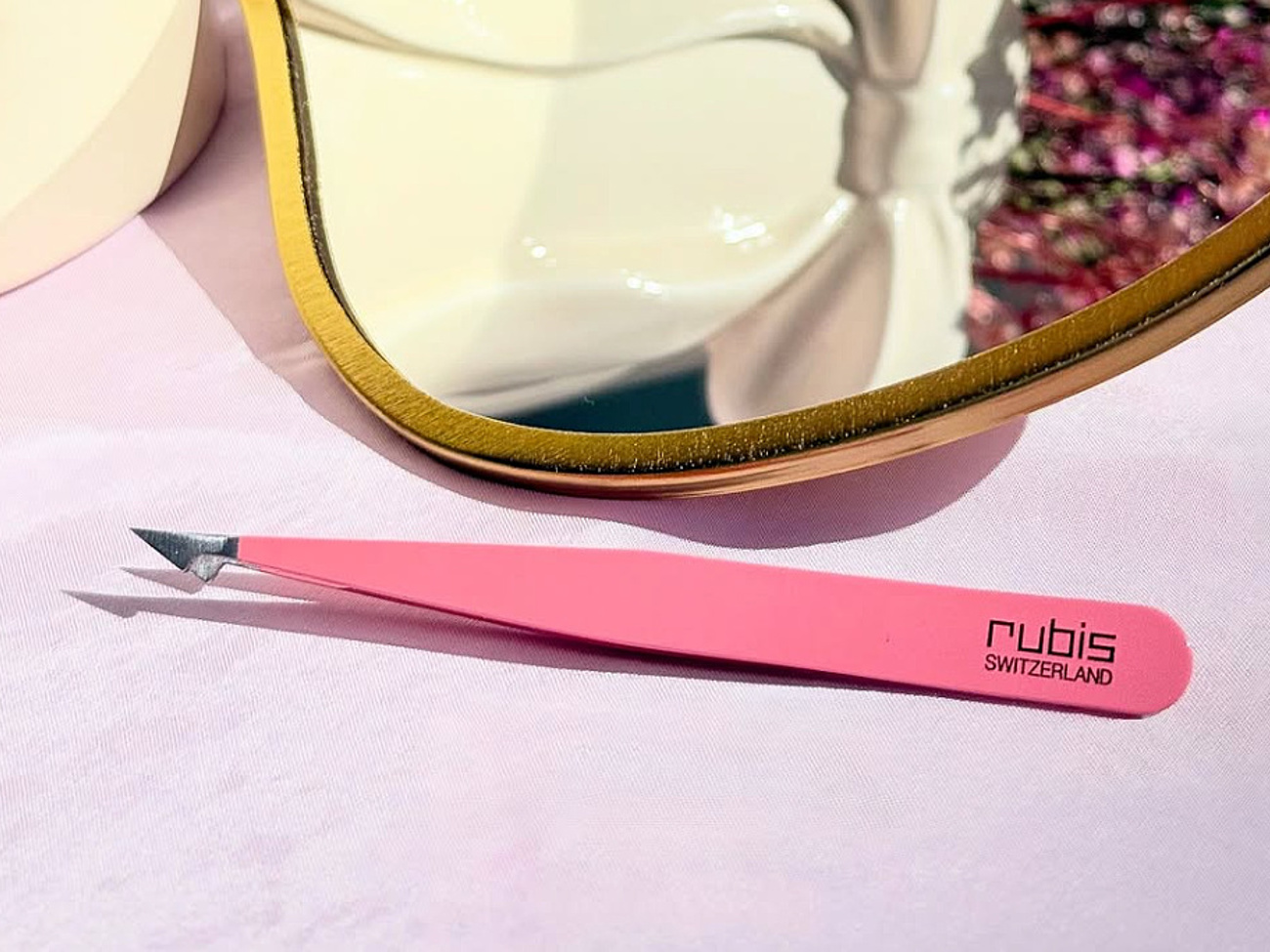
A common mistake is to work only with the very tip of the tweezers. With angled tweezers, it can help to grasp the hair slightly further back within the gripping surface. This creates more contact, allowing for a more controlled grip on the hair. It’s important to grasp the hair as close to the skin as possible.
Always pull in the direction of hair growth
If a hair is pulled out against its natural direction of growth, there’s a greater risk that it will break off instead of being removed completely. It’s better to position the tweezers flat against the skin and pull the hair out in the direction it grows. This is especially true for thicker or slightly longer hairs.
Gently Tighten the Skin
Especially around the eyebrows, it can help to gently tighten the skin with your free hand. This smooths out the area, allowing the hair to stand out more freely and often making it much easier to grasp. It also reduces the pull on the skin and makes plucking more controlled.
Broken hairs require patience
Sometimes the problem isn’t with gripping the hair at all, but rather that the hair has broken off beforehand. In that case, only a very short stub remains visible just above the skin’s surface. You shouldn’t try to forcefully pluck it repeatedly.
Better: wait a little while until the hair has grown out further. Once it’s long enough, it’s usually much easier and cleaner to remove.
The tweezers themselves may also be the problem
If a pair of tweezers suddenly doesn’t grip as well, even though your technique is correct, it’s worth taking a closer look at the tips.
If they’re dirty, slightly bent, or no longer close properly, even a good pair of tweezers can lose precision.
Therefore:
- Clean the tips regularly
- Store tweezers in a dry place
- Use a protective cap
- Avoid dropping them whenever possible
The finely crafted tips are the most delicate part of cosmetic tweezers.
Fine hairs are the true test of quality
A thick hair can be grasped with almost any pair of tweezers.
The differences become apparent with very short, fine, or straight hairs. That’s exactly where precisely calibrated tips and good control while working are essential.
Rubis manufactures cosmetic tweezers in Switzerland as precision instruments. The goal is simple: a beauty tool should work reliably.
And sometimes, that’s exactly the difference between ten unsuccessful attempts and a single clean grab.